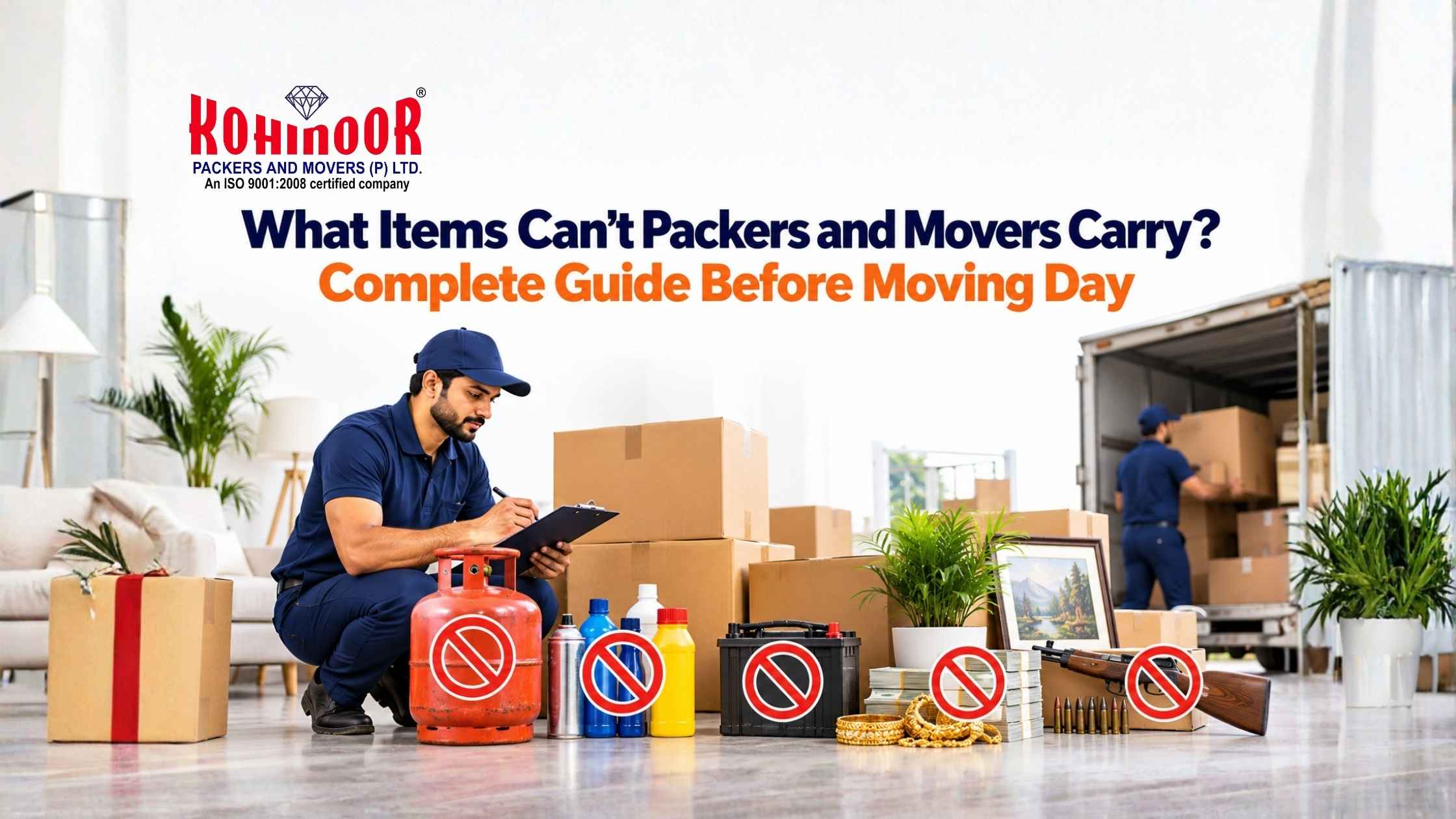
Summary – Packers and movers generally refuse to transport hazardous materials, explosives, illegal goods, and certain flammable or perishable items. Cash, jewellery, important documents, medicines, pets, plants, and specialised equipment may need separate arrangements or special handling. Restrictions vary by moving company, shipment type, route, and applicable rules. Before booking packers and movers in Pune, Mumbai, or anywhere in Maharashtra, confirm which items can be transported and which you should carry yourself.
Planning a house move involves more than packing furniture and loading cartons into a truck. You also need to decide which belongings are suitable for transportation, which require special care, and which should stay with you. Discovering a restricted item on moving day can delay loading, create confusion, and add unnecessary stress.
Whether you are shifting a 1BHK apartment in Pune, relocating your family from Mumbai to another city, or moving between locations across Maharashtra, knowing these restrictions in advance can make the process easier.
What Items Can’t Packers and Movers Carry? Quick Checklist
The following table covers common restricted or sensitive items and the steps you should take before moving.
Item category | What you should do |
Petrol, diesel, fireworks and explosives | Confirm restrictions and arrange safe handling or disposal |
Hazardous chemicals and corrosive cleaners | Check product labels and follow safe disposal guidance |
Cash, jewellery and valuable documents | Carry them securely yourself |
Perishable and refrigerated food | Use up or safely dispose of unsuitable items |
Pets and live animals | Arrange appropriate transportation separately |
Plants and garden supplies | Confirm company acceptance and route-specific requirements |
Batteries and power banks | Declare them and confirm handling requirements |
Antiques and specialised equipment | Request approval and clarify packing and coverage |
Illegal or legally restricted goods | Do not transport prohibited items |
This is a practical guide, not a universal list of prohibited goods. Some items are commonly refused, while others may be accepted under specific conditions. Always confirm the policy that applies to your shipment.
Why Do Packers and Movers Refuse Certain Items?
Moving companies restrict certain belongings because they can create safety hazards, damage other goods, or require transportation arrangements beyond a standard household move.
The main reasons include:
- Fire and safety risks: Fuels, fireworks, and some chemicals can create dangerous conditions during transportation.
- Legal restrictions: Certain goods require permits or documentation, while others cannot legally be transported.
- Risk of damage: Leaking liquids and chemicals can damage furniture, clothing, mattresses, and electronic appliances.
- Insurance exclusions: Some items may fall outside the agreed coverage or liability terms.
- Special handling requirements: Pets, plants, fragile valuables, and specialised equipment may need separate arrangements.
For example, while preparing for a move from Pune to Mumbai, you might find leftover paint, cleaning liquids, and a small fuel container in your storage area. These items should not automatically be packed with ordinary household belongings. Check their labels and confirm acceptance with your moving company before loading.
1. Can Packers and Movers Carry Gas Cylinders, Petrol or Fireworks?
Flammable and explosive materials are among the most important items to check before moving day. Petrol, diesel, kerosene, fireworks, and certain solvents can create serious safety risks.
Common examples include:
- Petrol and diesel stored in cans
- Kerosene and other combustible fuels
- LPG cylinders and fuel containers
- Paint thinners and flammable solvents
- Firecrackers, fireworks, and explosives
- Certain aerosol products and pressurised containers
Many moving companies restrict these items, although the exact policy depends on the product and transportation arrangements.
Never place fuel containers or fireworks inside household cartons. Do not disconnect, empty, or dispose of a gas cylinder without following the supplier’s instructions and applicable safety guidance. Contact the relevant supplier or service provider to arrange safe handling before moving day.
2. Which Hazardous Chemicals and Cleaning Products Should You Avoid Packing?
Some everyday cleaning products can become dangerous if they leak, mix with other substances, or damage surrounding belongings. Movers may refuse or require special arrangements for corrosive cleaners, acids, pesticides, insecticides, industrial solvents, and poisonous chemicals.
Even a leaking bottle of bleach or drain cleaner can damage a carton and contaminate nearby items.
Before packing your kitchen, bathroom, balcony, or utility cupboard:
- Check the labels and warnings on cleaning products.
- Separate hazardous substances from ordinary household goods.
- Follow the manufacturer’s instructions for safe disposal.
- Ask your moving company about products you are unsure of.
Never transfer chemicals into unlabelled bottles or hide them inside ordinary cartons. Clear identification helps prevent accidental exposure and damage during handling.
3. Should You Give Cash, Jewellery and Important Documents to Movers?
It is generally safer to keep cash, jewellery, passports, identity documents, property papers, bank records, and other irreplaceable personal belongings with you.
Some moving companies exclude these items from their standard inventory or coverage. Even when a company agrees to transport a particular valuable item, its handling and insurance conditions may differ from those for ordinary household goods.
Before the packing team arrives, set aside:
- Cash, jewellery, watches, and precious items
- Passports and identity documents
- Property papers and rental agreements
- Bank documents and cheque books
- Educational certificates and legal records
- Essential medical and insurance documents
Keep these belongings in a secure personal bag that stays with you throughout the journey.
For example, if you are shifting a family home in Mumbai, separate jewellery, passports, and property documents before the team begins packing cupboards. This avoids confusion when cartons are labelled, loaded, and delivered.
4. Can Packers and Movers Transport Food and Refrigerated Items?
Perishable food can spoil during transit, particularly on longer journeys or when temperature-controlled transportation is unavailable. Milk, meat, cooked meals, frozen products, and other temperature-sensitive goods may therefore be refused.
Open grocery packets can also spill, attract pests, or contaminate other belongings if they are not sealed properly.
A few days before shifting:
- Use up refrigerated and frozen food where possible.
- Avoid buying large quantities of groceries.
- Seal suitable dry food in airtight containers if the mover permits it.
- Dispose of spoiled food responsibly.
- Prepare your refrigerator according to the manufacturer’s instructions.
If you are moving from Pune to Mumbai or relocating to another state, plan meals around the moving date rather than transporting food that may not remain safe to eat.
5. Can Packers and Movers Carry Pets and Plants?
Pets and live animals should not be treated as ordinary household cargo. A standard moving truck may not provide suitable ventilation, temperature control, or care during transit.
Arrange appropriate transportation for dogs, cats, birds, aquarium fish, and other animals. Depending on the journey, you may need a suitable carrier, water, rest breaks, veterinary advice, and relevant documentation.
Plants also need advance planning. Some movers accept selected indoor plants, while others restrict them because of leakage, damage, journey length, or route-specific requirements. Interstate and international moves may involve additional rules.
Confirm arrangements early, particularly if you are moving between Maharashtra and another state or relocating overseas.
6. Are Batteries, Medicines and Electronic Devices Prohibited?
Not necessarily. Batteries, power banks, medicines, laptops, and other electronic devices should not automatically be classified as prohibited items. Their acceptance depends on factors such as battery type, condition, packaging, storage requirements, and transport method.
Keep essential prescription medicines accessible during the journey. If a medicine requires refrigeration or other special conditions, plan suitable storage rather than placing it in a regular carton.
For batteries and power banks, tell your mover what you have and follow the applicable transport and packaging instructions. Do not pack damaged or swollen batteries with ordinary belongings.
Mobile phones, laptops, chargers, house keys, bank cards, and everyday essentials are generally best kept in your personal bag for convenient access.
7. What About Illegal Goods, Antiques and Specialised Equipment?
Moving companies cannot lawfully transport goods that are prohibited under applicable law. Other items may require licences, declarations, permits, or specific documentation.
Examples include illegal drugs, unauthorised weapons, and other legally restricted goods. Never assume an item can be transported simply because it belongs to your household.
Antiques, artwork, sculptures, and expensive electronics may be accepted but need specialist packing or written confirmation of coverage. Medical equipment and pressurised cylinders may require specific handling arrangements.
Vehicles and machinery also need suitable transport planning. If you need to relocate a car or two-wheeler, explore car transportation services. For industrial or oversized equipment, discuss your requirements for heavy machinery shifting services.
For international relocation, check destination-country import restrictions and customs documentation before deciding which belongings to ship.
Common Mistakes to Avoid Before Moving Day
Even when you hire professional packers and movers, a few small oversights can complicate the relocation. Avoiding these common mistakes can help you prepare more confidently.
Packing everything without checking the contents: It is easy to put leftover paint, cleaning liquids, batteries, and other items into a carton simply because they are still in the house. Check cupboards, utility areas, and storage spaces before packing begins.
Assuming every item is covered by insurance: Customers sometimes believe that all belongings are automatically covered during transit. Coverage depends on the agreed terms, declared inventory, exclusions, and applicable policy conditions. Before booking, review the details of Kohinoor Movers’ transport insurance services and clarify the coverage and claim requirements for your move.
Leaving valuables in ordinary cartons: Jewellery, cash, passports, and property documents can get mixed up with general household goods. Keep these items separate and carry them securely yourself.
Waiting until the truck arrives to disclose special items: Pets, plants, unusual equipment, and potentially restricted goods may require different arrangements. Inform the company early so the team can confirm what is possible.
Forgetting to plan for the first night: Essentials such as medicines, chargers, toiletries, a change of clothes, and basic documents can be difficult to find among sealed cartons. Pack a separate overnight bag and keep it with you.
The simplest way to avoid these problems is to prepare a restricted-items checklist, share a complete inventory, and clarify the moving company’s requirements before the scheduled date.
What Should You Do With Items Packers and Movers Won’t Carry?
Once you identify restricted belongings, take these practical steps.
- Create a separate checklist. Inspect every room, including kitchen cupboards, bathrooms, balconies, garages, and storage areas. Look for fuels, chemicals, valuables, medicines, and unusual equipment.
- Dispose of hazardous products responsibly. Follow product labels, supplier instructions, and local disposal guidance. Do not pour chemicals into drains or discard hazardous materials with ordinary waste without checking the appropriate procedure.
- Carry essential belongings yourself. Keep documents, jewellery, medicines, keys, and daily-use items in a secure personal bag.
- Arrange separate transportation where necessary. Pets, plants, vehicles, and specialised equipment may need dedicated arrangements. Confirm availability, costs, and requirements before booking.
- Share a complete inventory. Tell the moving company about unusual, fragile, valuable, or potentially restricted items before the quotation is finalised.
- Confirm packing and loading arrangements. For accepted household belongings, review packing and moving services and loading and unloading services.
If some belongings cannot be moved immediately, ask whether suitable warehousing and storage services are available.
What Happens If You Hide a Restricted Item in a Moving Carton?
Concealing a restricted item can create safety risks and disrupt your relocation. If the team discovers it during packing or loading, the item may be refused, the loading plan may need to change, and delivery could be delayed.
Hazardous materials can also leak or react with other products, potentially damaging furniture, clothing, appliances, and other belongings. Depending on the circumstances and policy terms, undisclosed items may affect liability or an insurance claim.
Instead, tell the moving company about the item before moving day. Keep your inventory, quotation, receipts, photographs, and relevant communication if a dispute or claim arises. You can review bill and claim services for information relevant to your requirements.
How Can You Confirm Your Mover’s Restricted Items List?
Before paying an advance, ask your moving company these questions:
- Which items are completely prohibited?
- Which belongings require special approval or handling?
- Are valuables and fragile items covered?
- What are the insurance exclusions and claim requirements?
- Can vehicles, plants, or specialised equipment be transported separately?
- Are there route-specific restrictions for interstate or international moves?
For a relocation within Maharashtra, confirm the requirements for your exact route and inventory. For interstate moves, check applicable transportation requirements. For overseas relocation, ask about customs documentation and destination-country restrictions.
Depending on your relocation needs, Kohinoor Movers offers domestic moving services, international moving services, and office relocation services.
Planning a Move? Confirm Your Items Before Moving Day
A smooth relocation starts with a clear inventory and realistic planning. Before moving from Pune, Mumbai, or anywhere across Maharashtra, identify restricted items, separate valuables and essential documents, and inform your moving company about anything that needs special handling.
Contact Kohinoor Movers to discuss your relocation requirements and request a moving quotation. Share your pickup and delivery locations, preferred moving date, household inventory, and details of any unusual or specialised items. This helps the team understand your requirements and discuss suitable packing, loading, transportation, and handling arrangements before moving day.
Frequently Asked Questions
What items do packers and movers usually refuse to carry?
Commonly restricted items include explosives, fireworks, flammable fuels, hazardous chemicals, illegal goods, and certain perishable products. Other belongings, such as jewellery, documents, pets, plants, and batteries, may require personal transportation or special approval.
Can packers and movers carry gas cylinders?
Many moving companies restrict LPG cylinders and fuel containers because of safety risks. Confirm the company's policy and follow the supplier's instructions for safe handling before moving day.
Can I pack jewellery and cash with household goods?
It is safer to carry cash, jewellery, and other valuable personal belongings yourself. Check the mover's inventory rules and coverage exclusions instead of assuming these items are insured.
Will packers and movers transport food and groceries?
Acceptance depends on the food type, packaging, journey length, and company policy. Perishable and refrigerated products may be unsuitable for standard household transport, so plan to use them up or arrange an alternative.
Can packers and movers transport pets and plants?
Pets generally need suitable separate transportation. Plant acceptance varies according to the mover, journey, plant condition, and applicable rules. Confirm arrangements well before the moving date.
Do all packers and movers have the same restrictions?
No. Restrictions vary by company, route, shipment type, safety requirements, and insurance terms. Ask for the applicable restricted-items list before booking.
What should I do if movers refuse to carry an item?
Ask why the item is restricted and whether it can be accepted under specific conditions. If it cannot be transported, arrange suitable separate transportation or safe disposal, depending on the item.




Leave a comment